The bee-bee tree
Evodia daniellii, also known as Tetradium daniellii or the bee-bee tree, is valued for its nectar and its appeal to bees. Native to eastern Asia, including Korea, it is also grown as an ornamental tree for its relatively fast growth and dense green crown.
Its most distinctive feature is its generous production of nectar, which makes it particularly interesting to beekeepers.
Its fragrant white flowers attract many bees, followed later by colourful fruits.
Large clusters of small, creamy-white flowers form in summer. Their strong fragrance and the timing of flowering, often from late July into late summer, are part of the tree’s appeal.
This is useful because nectar-rich flowers can be less plentiful at that time of year. Small fruits develop after flowering.
For beekeepers, a tree such as Evodia daniellii can provide a valuable nectar source from July to September, when many other plants have finished flowering. It can therefore support bees as well as honey production.
An unusual ornamental tree
It is not a common tree in gardens and is often seen in botanical collections. Its longevity means that some specimens planted many decades ago can still be admired today.
Evodia daniellii also has ornamental value, with a regular crown and dense, rich-green foliage that provides welcome shade. It can grow quickly in its early years and develop into a substantial tree, so allow room for its mature size.
Leave sufficient space between it and other plants to allow the crown to develop naturally.
The leaves remain green into autumn before turning pale yellow and falling.
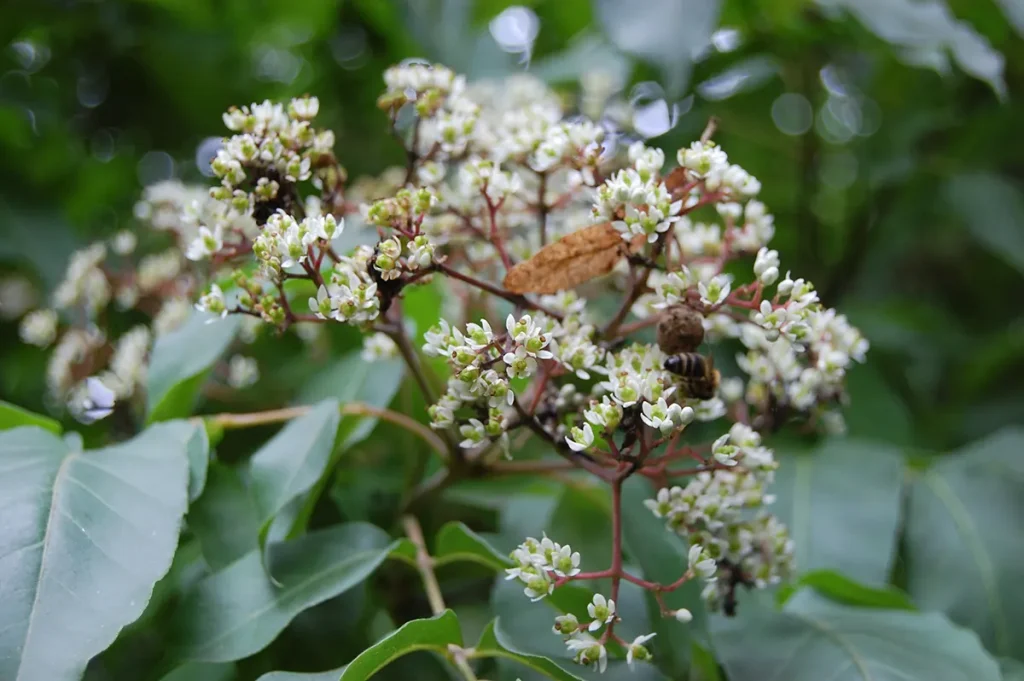
The qualities of Evodia daniellii
Above all, its late-season nectar can help bees build up their food reserves before winter.
Parts of this tree have also been used in traditional Asian medicine. This is historical context rather than advice to consume or use the plant for medical purposes.
Caring for Evodia daniellii
Once established, the tree is fairly hardy and can tolerate cold conditions. Young plants need greater care and protection.
Good drainage is important: avoid waterlogged ground. An established root system helps the tree cope with dry periods.
When planting, allow sufficient distance from other plants for balanced growth and enough space for its eventual size.
Our specimens are grown in pots for easier transport and are ready to move from our nursery to your garden.
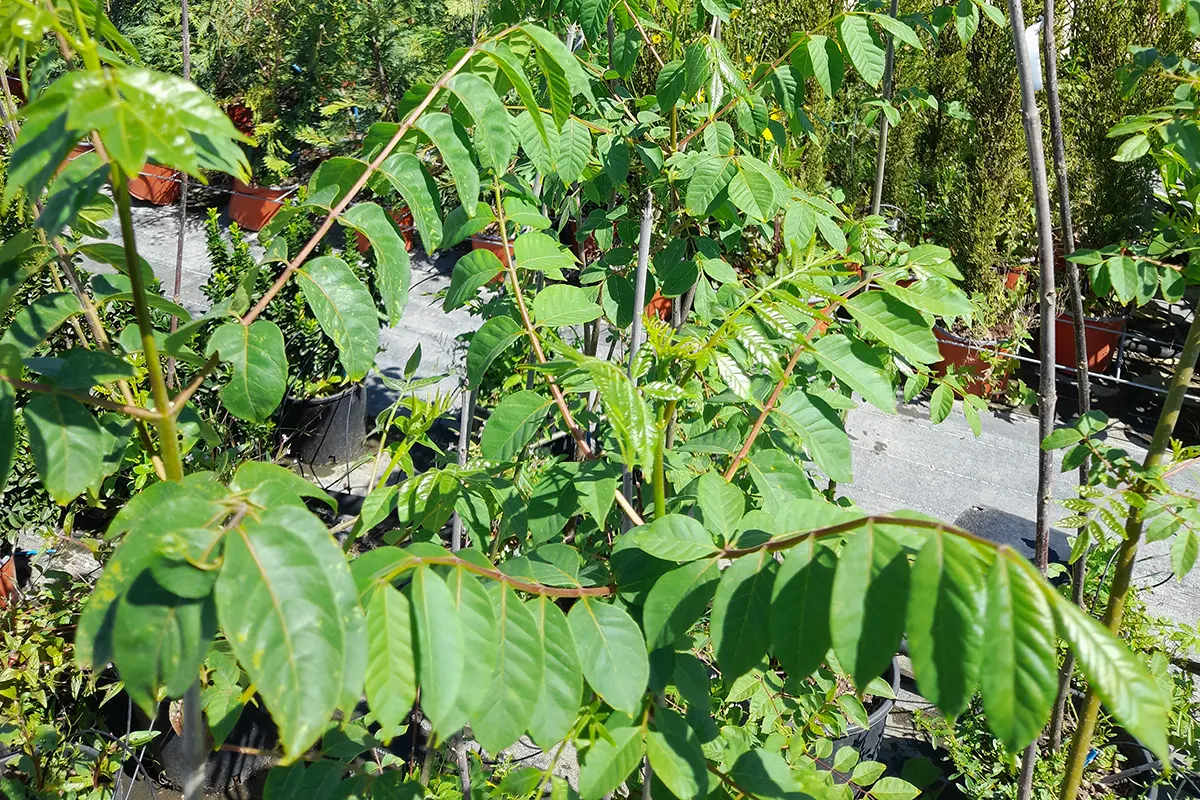
A potted Evodia daniellii at our display area on the outskirts of Sassari.