Robotic lawnmowers are now a familiar part of garden care. As nursery growers and landscapers, we also help customers with their installation and maintenance.
Through specialist partnerships, we can install robots and look after them over time. Servicing a robotic lawnmower differs from working on a conventional mower or ride-on machine: these automated systems need technicians familiar with their installation, controls and maintenance.

RobotEasy is our partner for robotic lawnmower servicing and other garden robots.
RobotEasy is a European network of experienced robot installers and service technicians, working with robotic lawnmowers and other automated garden equipment.
Its service-centre network operates across Italy. Ongoing training, manufacturer updates and customer feedback help technicians keep their knowledge current and monitor the quality of the service.
Regular mowing is part of keeping a lawn tidy. A suitable robotic mower can help reduce the amount of manual work involved.
- Maintenance — keeping the machine in good working order
- Repairs — identifying faults and suitable solutions
- Installation — choosing a setup that suits the garden
- Advice — contact us with your questions
- Robotic pool cleaner installation and servicing
- Mosquito-control systems
- Rental
Garden robots are used in private gardens and public parks. Their automated operation still requires suitable installation and periodic specialist care. We work with a range of brands and can advise on the support available for your machine.
Some of the brands we work with








Are all robotic lawnmowers the same?
No. This short guide explains some differences and the factors to consider when choosing a robot for your lawn.
How does a robotic lawnmower work?
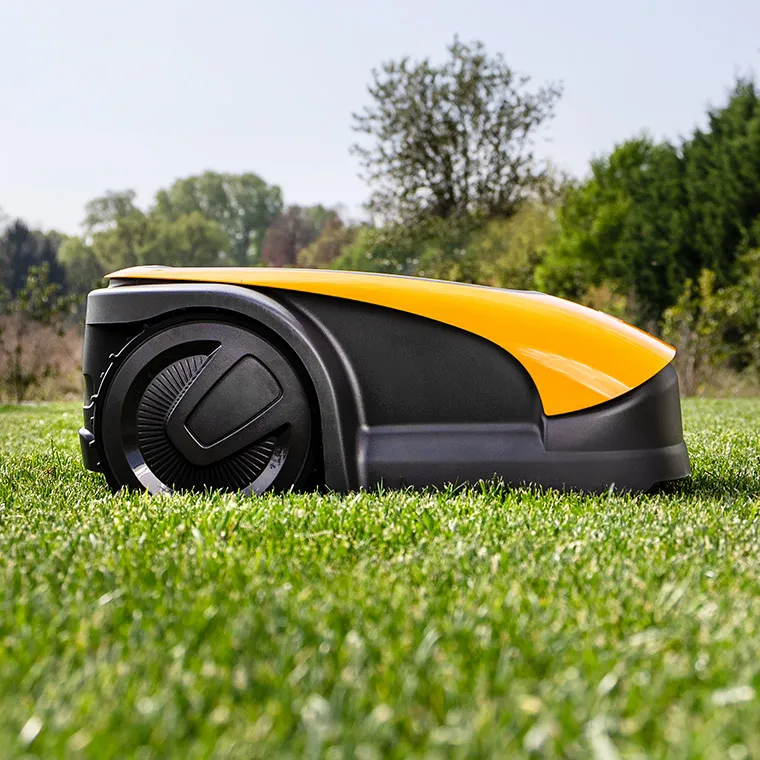
Features vary, but robotic lawnmowers are designed to navigate a defined area and cut the grass automatically.
The cutting blades sit beneath a low, wheeled body. Routes, mowing frequency and return to the charging station depend on the model and the settings chosen during installation.
Some models can adapt their schedules or routes automatically. The available functions vary by manufacturer and model.
Some robots connect to a smartphone app for mowing settings and scheduling. Depending on the model, you may be able to define starting points or zones to help cover a garden with an irregular shape.
Frequently asked questions
Robotic lawnmower or ride-on mower?
A common question is whether a robot or a ride-on mower is better suited to a particular garden.
For a small lawn, a robotic mower can be a compact and practical option, provided the lawn layout and access are suitable.
For medium-sized gardens, including many villa gardens in Sardinia, the choice depends on the site. A robot can reduce routine mowing work. Costs include the machine, any installation work and ongoing items such as servicing, blades, batteries and electricity.
Ride-on mowers need storage space, an operator and regular maintenance. They may still suit some larger sites and other requirements.
Robotic lawnmowers with a boundary wire
Many robots use a cable around the mowing area. Sensors detect the wire and keep the machine within the defined boundary. Depending on the model, obstacle and lift sensors provide additional safeguards. Mowing patterns and navigation vary.
GPS-guided robots without a boundary wire
Some models use satellite-based guidance instead of a boundary wire. STIGA’s Stig-A range, for example, uses its Active Guidance System to plan mowing around satellite-signal availability. Suitability still depends on the site, reception, installation and the manufacturer’s requirements.
Where do the grass clippings go?
Most robotic lawnmowers cut small amounts frequently and leave finely chopped clippings on the lawn. This mulching process returns nutrients to the soil and usually removes the need to collect grass in a basket.

Robotic lawnmowers and dogs: what should owners consider?
A robotic lawnmower has moving cutting blades and must be used with care around pets, children and wildlife. Safety features help reduce risks, but do not remove them.
Sensors and safe operating conditions
Many robots include obstacle, lift or tilt sensors. Their capabilities vary, so the machine’s instructions and the conditions of the garden are important.
No mower should be treated as completely safe around animals. Keep pets and children away from the mowing area while it is operating, following the manufacturer’s instructions.
Do not assume a dog will instinctively keep away from the machine. Arrange mowing when the garden is clear of pets.
The chassis and blade guards form part of the safety design, but they are not a reason to allow animals near a working mower.
Reducing risks for pets and wildlife
Schedule mowing for times when pets and children are indoors and check that the lawn is clear before operation. Daylight operation can also help you spot wildlife, including animals that may be active at night.
Introduce pets to the garden setup only with the robot switched off and keep them away during operation and charging. If an animal reacts to or approaches the mower, stop the machine safely and seek advice before using it again.
How do I choose a robotic lawnmower?
Consider lawn size, layout, slopes, trees, access between zones and the presence of pets or other garden users.
Contact us before choosing a machine. We can assess the type and size of your garden and suggest a suitable installation.
The size of the lawn
From a compact garden to a villa’s larger grounds on the Costa Smeralda, selecting a model with appropriate capacity is important. Allow for the actual mowing area, the layout and the time available for mowing.
Slopes and other obstacles
Larger gardens may follow uneven ground or include slopes and obstacles. Some models can handle gradients around 45%, but limits differ between machines and may be lower at boundaries. A site assessment helps us check the conditions against the model’s specifications.