Cacti and succulents
How do cacti differ from other succulents?
Succulents are plants adapted to storing water in their leaves, stems or roots. Cacti are one group within this wider category. Water-storage tissues, including water-storing parenchyma, give many succulents their distinctive fleshy appearance and help them cope with dry conditions.
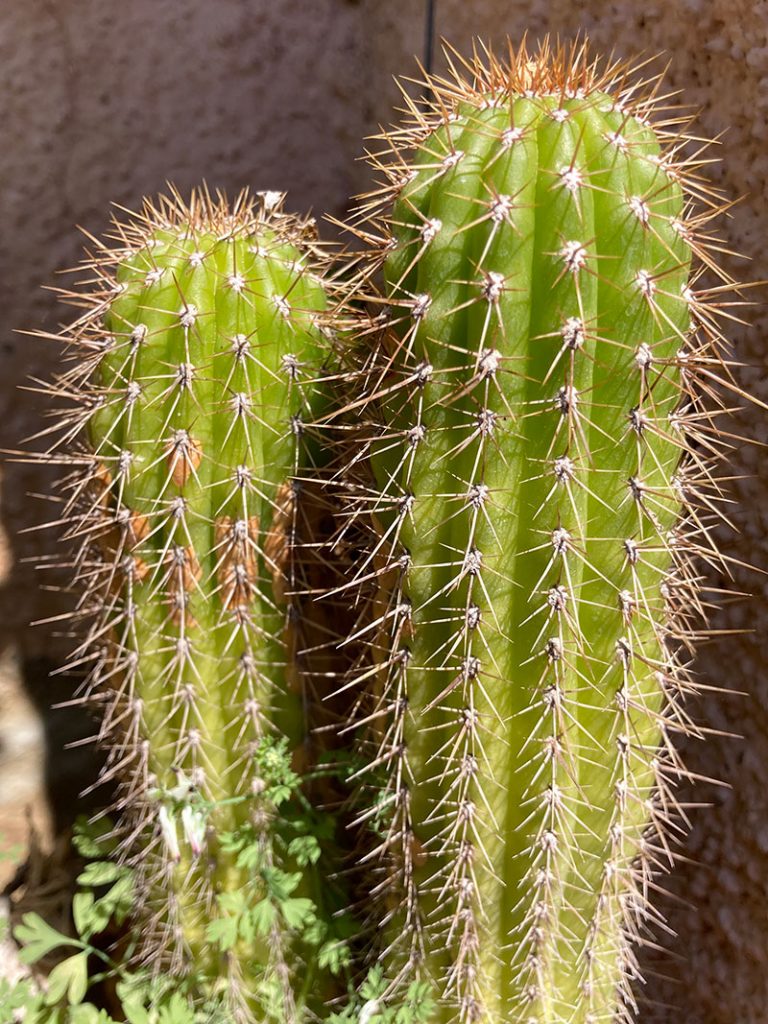
Once absorbed, water is conserved through adaptations such as thicker outer tissues and protective waxes.
Hairs and spines can also reduce water loss or provide protection. In many cacti, leaves have developed into spines and the green stem carries out photosynthesis.
These adaptations have produced a remarkable variety of shapes, often with striking flowers. Many species are popular with collectors.
Familiar examples include cacti, agaves, aloes and prickly pears, all commonly seen in gardens.
All cacti are succulents, but not all succulents are cacti. The wider succulent group includes many plants without cactus spines.
Our nursery offers a broad selection of cacti and succulents. Visit our shop to see their variety of forms and ask which plants suit your space and growing conditions.
Plants for collectors
Cacti and other succulents are fascinating subjects for collectors and photographers, with distinctive shapes and, in some cases, protective spines.
Some produce spectacular flowers. Certain agaves, for example, develop flowering stems several metres tall.
Other collectible species stay very small, sometimes measuring only a few centimetres.
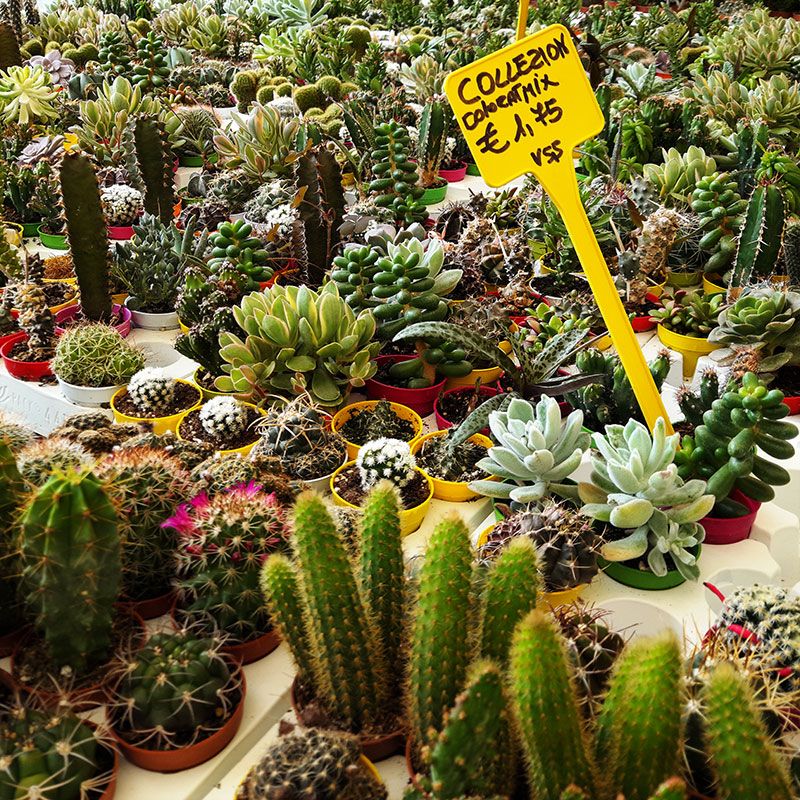
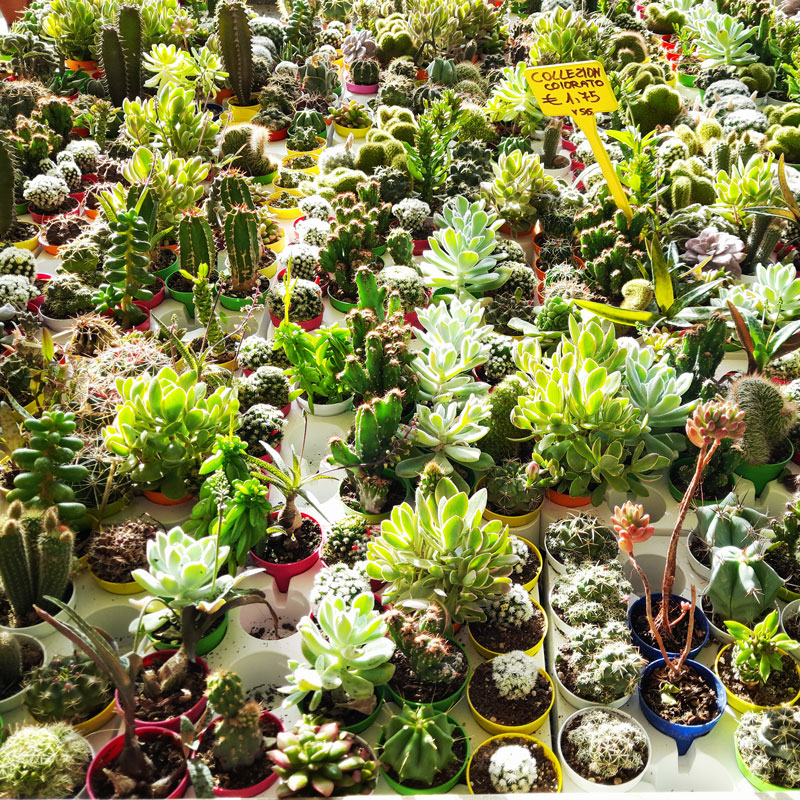
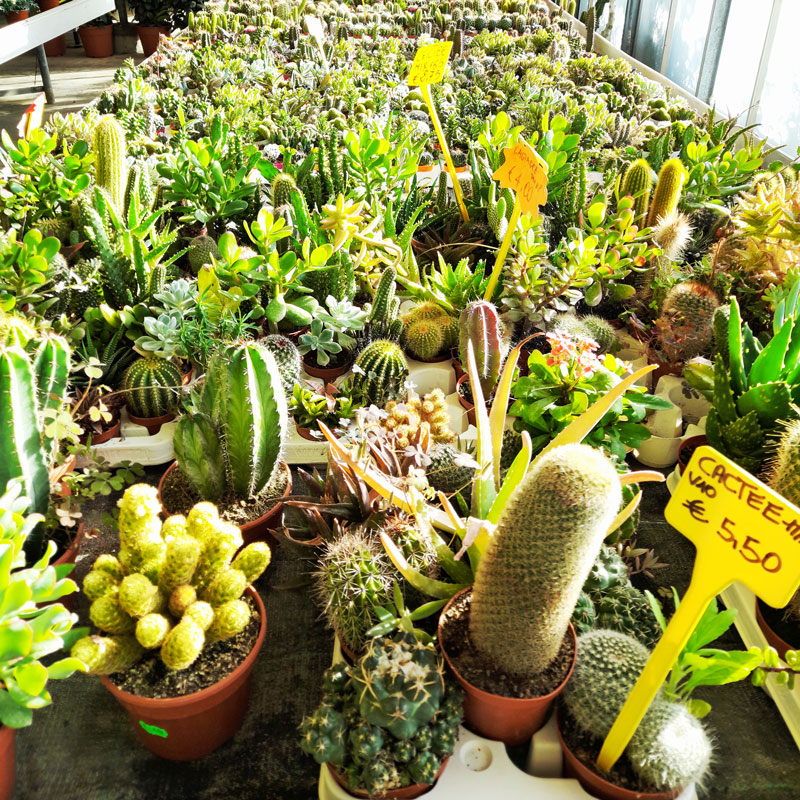
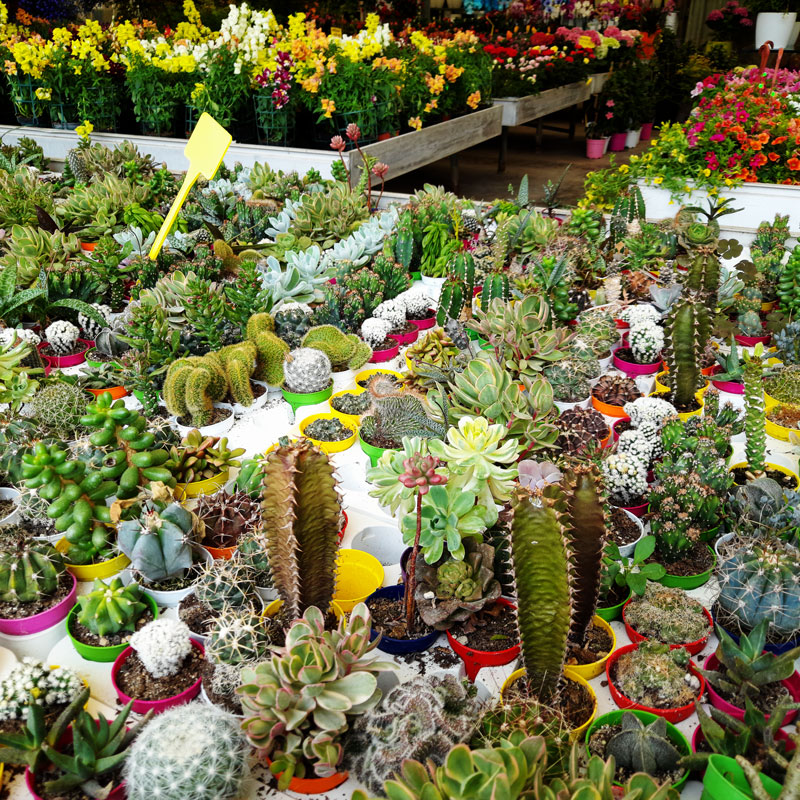
Many succulents need less frequent watering than other plants, but their light, temperature and drainage requirements vary. Some can thrive indoors in a suitably bright position or in small spaces. These photographs show a few examples from our nursery.