Holm oak: robust and evergreen
The holm oak, Quercus ilex, is one of the most characteristic trees of Sardinia’s wooded hills. Unlike many other oaks, it is evergreen. Its lasting foliage and substantial mature size make it an attractive ornamental tree for gardens with enough space.
When it grows in the open rather than dense woodland, a holm oak usually develops a domed crown above a clear trunk, with extensive branching within the canopy.
Like the olive tree, it is exceptionally long-lived. Some specimens can survive for many centuries, giving these trees a sense of permanence and quiet strength.
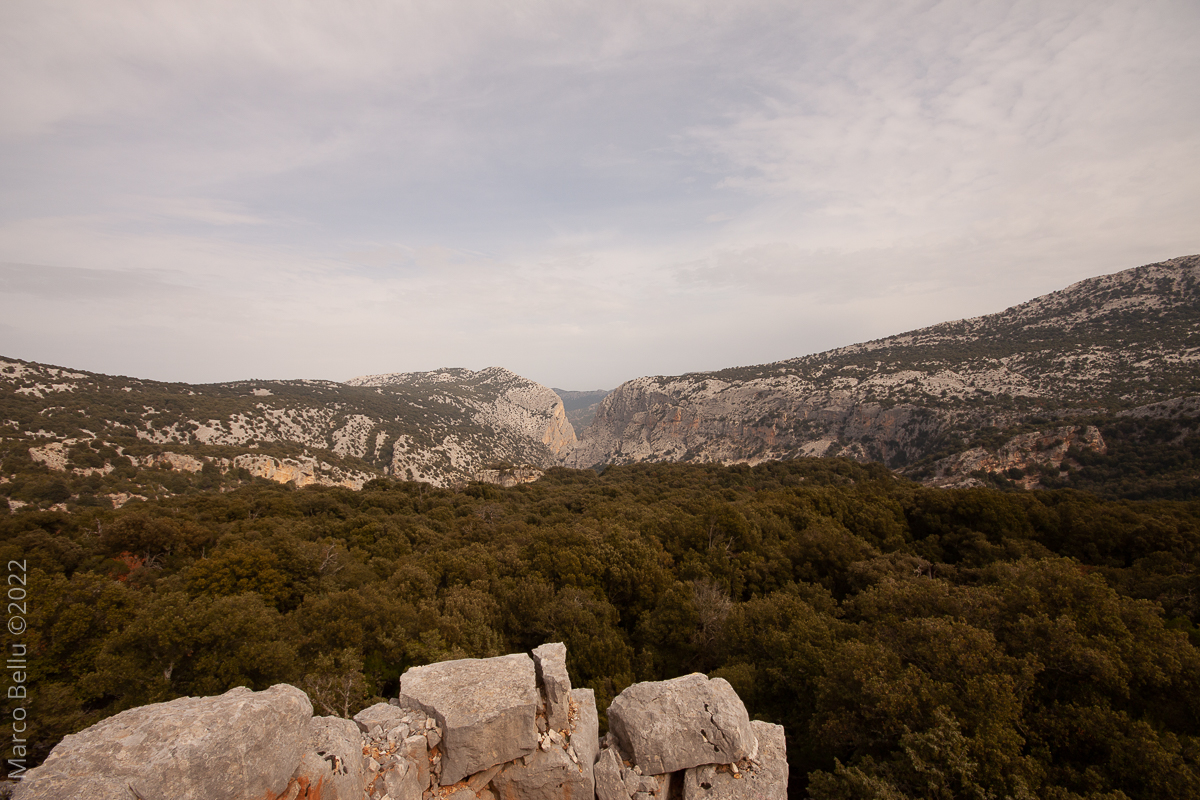
Holm oak woodland is widespread in Sardinia, which still preserves some rare and significant examples of old, established forest.
Much of the original woodland has disappeared. Holm oaks often grow alongside other species in areas affected by fires or intensive cutting during the nineteenth and twentieth centuries. The regrowth patterns of many trees still show this history.
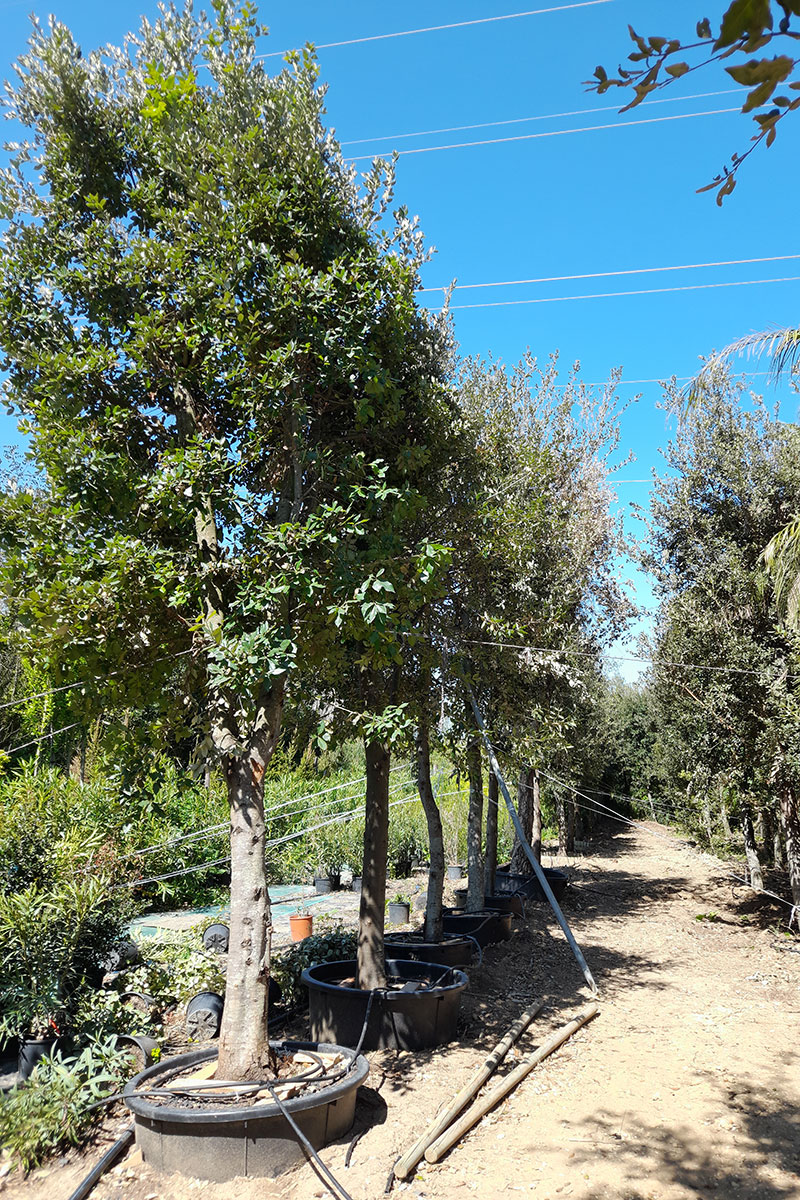
Holm oaks at our nursery
At our nursery we stock holm oaks in different sizes, including substantial specimens. The original collection included trees with trunk girths around 50 cm and heights above five metres; contact us for current availability.
Larger specimens can give an established appearance to a newly planted garden or landscape.
Holm oak is well suited to the Sardinian climate, as its natural distribution shows. It tolerates limestone soils, sunny conditions and periods of drought, including the rocky slopes of the Supramonte.
The leaves generally remain on the tree for two to three years. They are arranged alternately; young plants can have toothed or spiny leaf margins that help protect them from browsing animals.
A young holm oak with a slender trunk may need staking to keep it upright and protect it in strong winds.
Larger, well-established specimens may need less support. We can advise on planting and staking for the individual tree and site.