The ornamental olive tree is one of our most sought-after plants. We stock trees of different ages and sizes, including mature specimens. Beyond its familiar role in food production, the olive is a beautiful evergreen tree that brings structure and character to gardens in Sassari and across Sardinia.
The olive tree: part of Sardinia’s identity
In Sardinia, as throughout the Mediterranean, wild olives grow naturally. Even in remote places, a closer look at the landscape often reveals evidence of former cultivation.
Stone terraces were sometimes built on steep ground for just a single tree. Some remain visible beside country roads, bearing witness to an ancient culture in which the olive has long been a powerful symbol.
Olive growing has shaped Sardinia’s landscape and everyday life, particularly along the coast and in the countryside around Sassari.
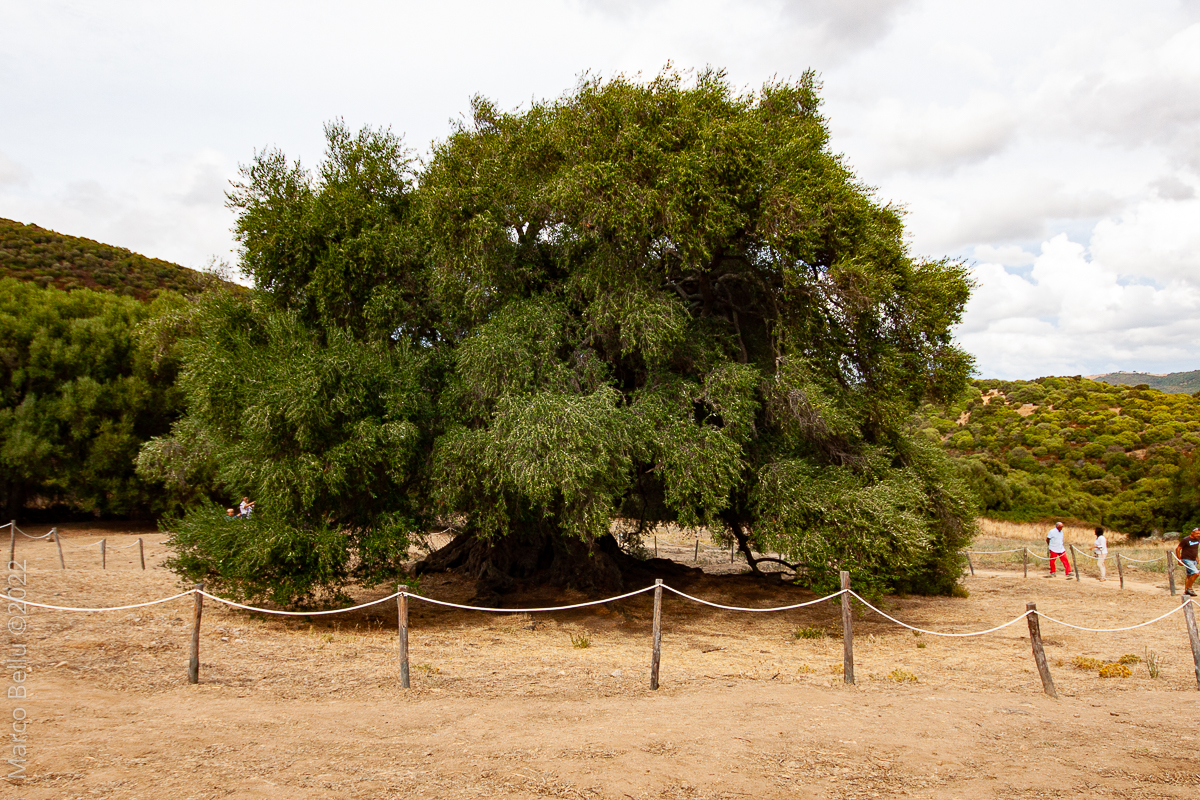
The tree also appears in local place names. Some ancient specimens have become living landmarks.
Sardinia has many centuries-old and ancient olive trees. The celebrated olive at Luras is commonly estimated to be around 4,000 years old, linking today’s landscape with the island’s distant past.
Across the Mediterranean, olive cultivation has long centred on food and olive oil. Yet Olea europaea also has great ornamental value and is a familiar feature of landscaped gardens.
It is a robust, beautiful garden tree suited to many Mediterranean settings. Its dense, durable timber is valued in traditional woodworking, while its longevity has made it a symbol of continuity across generations.
An ornamental tree with lasting meaning
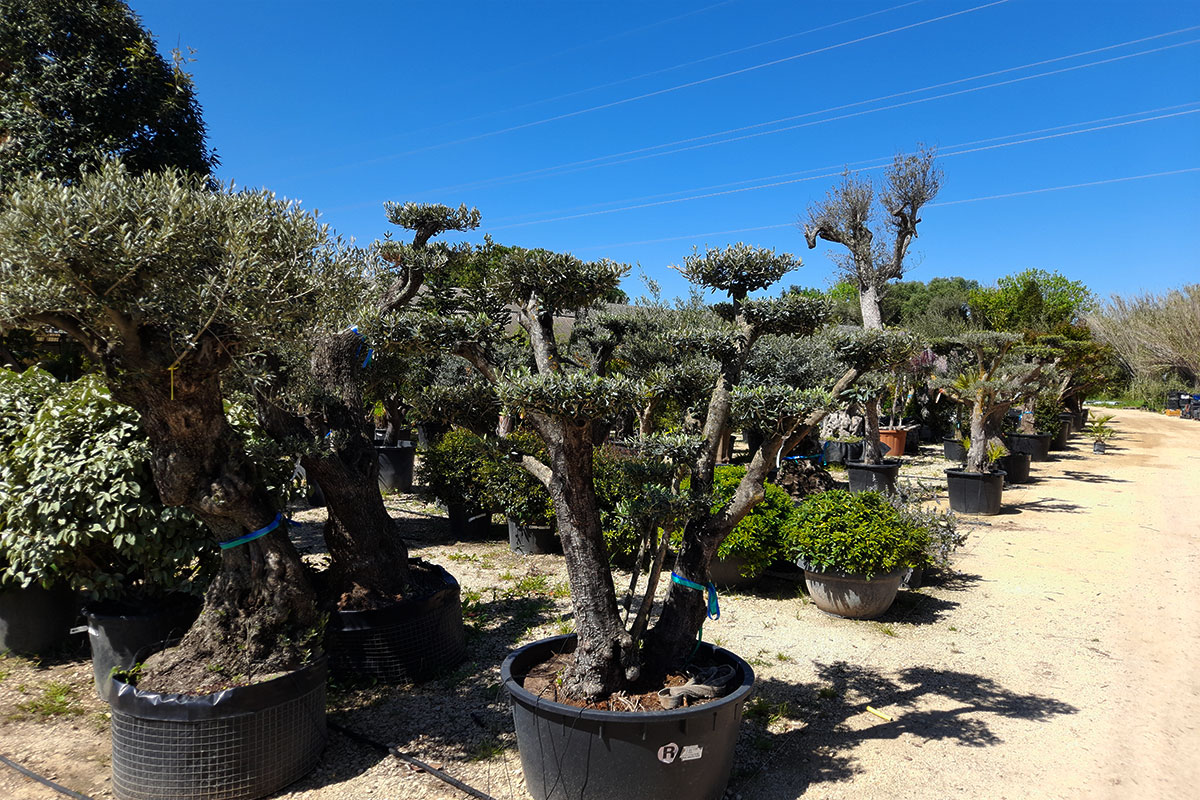
Olive trees are also well suited to topiary: the long-established practice of pruning plants into geometric or other sculptural shapes.
At our nursery and Sassari display area, you can find ornamental olives of different ages and sizes.
The range includes small specimens and bonsai-style forms as well as larger feature trees, grown naturally or shaped into ornamental forms.
This variety helps us suggest an Olea europaea that suits the space, the intended effect and your budget. Ask us about the specimens currently available.
Ornamental olives and topiary
The art of shaping foliage into figures developed in ancient Rome and continued in Italy and beyond. Frames can be used to guide growth, with pruning maintaining the intended form.
Topiary became a defining feature of formal Italian gardens in the seventeenth and eighteenth centuries, where clipped hedges framed elaborate planting patterns. Today it is also used for individual feature plants in private gardens, including ornamental olives such as those grown at our nursery.